Login to like or dislike this topic.
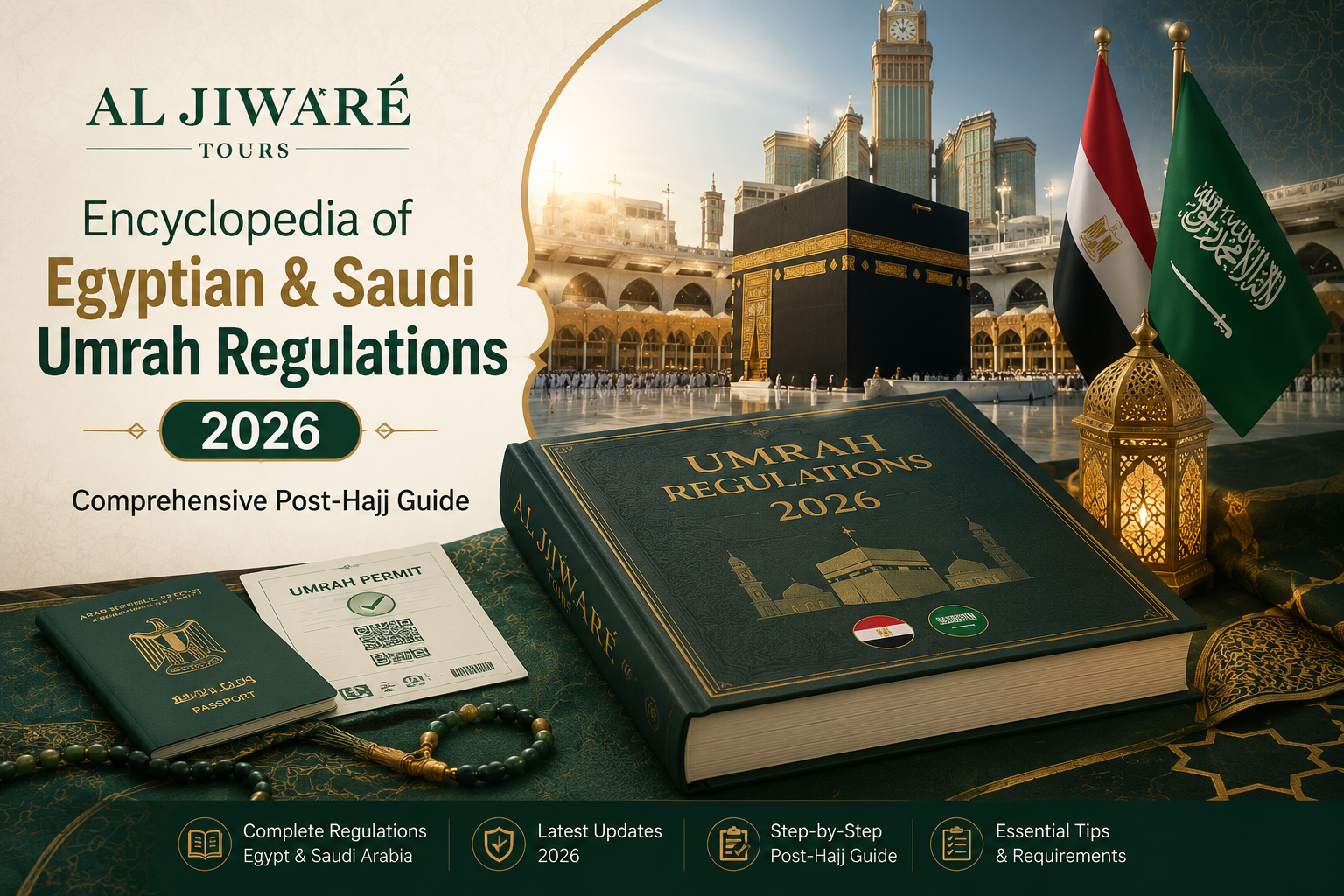
Encyclopedia of Egyptian & Saudi Umrah Regulations 2026
The Comprehensive Legislative, Logistical, and Operational Guide for Post-Hajj Journeys - Official Edition for Pilgrims and Tourism Operators
📑 Table of Contents
- 1. Introduction & Strategic Transformation in 2026
- 2. Egyptian Legislative Framework: Law No. 72 & Umrah Portal
- 3. Saudi Regulatory Architecture: Vision 2030 & Nusuk Governance
- 4. Specific Regulations for the "Post-Hajj" Season 2026
- 5. Comprehensive Logistical Guide: Accommodation & Group Allocations
- 6. Mobility & Transport Framework: Aviation, Haramain High-Speed Railway & Bus Fleet
- 7. Ecosystem of Digital Applications and Smart Platforms
- 8. Health Protocols, Safety Standards & Medical Insurance
- 9. Oversight Mechanisms, Inspection Protocols & Legal Penalties
- 10. Step-by-Step Pilgrim Journey & Frequently Asked Questions (FAQ)
1. Introduction & Strategic Transformation in 2026
The year 2026 marks a pivotal turning point and a fundamental transformation in the governance of Umrah journeys conducted between the Arab Republic of Egypt and the Kingdom of Saudi Arabia. Umrah operations have evolved far beyond traditional methodologies reliant on ad-hoc arrangements or individual discretion. Today, they operate within a highly precision-engineered operational ecosystem fully anchored in digital governance, strict legal frameworks, and seamless logistical integration between sovereign authorities in both nations.
This comprehensive encyclopedia derives its regulatory parameters from the rapid developments witnessed across the religious tourism sectors. Both Egyptian and Saudi authorities actively pursue ambitious strategic goals. From the Saudi perspective, these regulations align directly with "Saudi Vision 2030," which targets expanding the capacity to host more than 30 million Umrah pilgrims annually while elevating logistical and hospitality services to world-class standards. Conversely, Egyptian legislative updates aim to safeguard the dignity and financial rights of Egyptian citizens, protect them from fraudulent schemes or unlicensed brokers, and guarantee that the services delivered on the ground strictly match contracted agreements.
💡 Understanding the "Post-Hajj" Season Concept:
Organized Umrah trips taking place in the period immediately following the conclusion of the Hajj pilgrimage hold extraordinary significance in 2026. Commencing with the reopening of global visa portals following the departure of Hajj pilgrims, this period features distinct shifts in crowd dynamics, competitive hotel pricing, and the implementation of updated crowd management protocols, including capacity-calculated slots for Rawdah Sharif visits.
2. Egyptian Legislative Framework: Law No. 72 of 2021 & The Egyptian Umrah Portal
All operational and legal procedures governing Umrah departures from Egypt rest upon a solid statutory foundation led by Law No. 72 of 2021, establishing and regulating the "Egyptian Umrah Portal." In 2026, crucial executive updates have been enacted to enforce compliance across all industry stakeholders.
Core Legislative Pillars under Egyptian Law:
- Exclusive Authority for Licensed Tourism Companies: It is strictly illegal for any individual, unregistered association, or non-certified entity to organize Umrah trips, collect passports, or receive funds for pilgrimage purposes. Only Category (A) licensed Egyptian travel agencies are legally authorized.
- Mandatory Regulatory QR Code (Barcode): The QR code generated via the Egyptian Umrah Portal serves as the sole official digital document granting exit approval through air, sea, and land ports. This barcode is inextricably linked to an approved itinerary containing validated flight tickets, certified accommodation contracts, and active health insurance.
- Updated Barcode Validity (2026 Rule): Updated 2026 executive regulations mandate that the regulatory barcode remains valid for 72 hours only from the scheduled departure timestamp to eliminate ticket tampering or improper usage.
- Mandatory Unified Digital Contract: Travel agencies must execute a standardized digital contract with each pilgrim via the Portal, explicitly stating hotel names, exact distance from the Holy Mosques, hotel rating categories, meal plans, and transportation types.
⚠️ Severe Penalties Enforced in 2026:
Egyptian law imposes stringent financial penalties, ranging from 500,000 EGP up to 3,000,000 EGP, alongside double penalties for repeat offenses and immediate revocation of operating licenses for agencies facilitating departures without valid portal barcodes or marketing deceptive trips on social media.
3. Saudi Regulatory Architecture: Vision 2030 & Nusuk Platform Governance
The Kingdom of Saudi Arabia continues its rapid implementation of end-to-end digital governance across all pilgrimage services. For the 2026 season, the Ministry of Hajj and Umrah has established updated operational benchmarks designed to streamline arrival protocols and ensure structural efficiency.
Key Pillars of the Updated Saudi Architecture:
- Centralized Integration via "Nusuk": The Nusuk platform operates as the central engine for issuing visas, binding logistics packages, and scheduling ritual permits. Authorized Egyptian agencies cannot issue entry visas without procuring complete, verified service packages (BRN) directly from the system.
- Revised Visa Validity Rules: Under updated regulations, the validity of the Umrah visa is fixed at 90 days from the exact date of issue, departing from the historical rule of 90 days from entry. Pilgrims must depart before expiry without exception.
- Mandatory Saudi Service Contract (BRN): Every reference visa number includes an unalterable digital booking reference number (BRN) covering accommodations certified by the Saudi Ministry of Tourism and transportation licensed by the General Syndicate of Cars.
4. Specific Regulations for the "Post-Hajj" Season 2026
The post-Hajj operational phase possesses unique characteristics. Following the departure of Hajj pilgrims, Saudi authorities launch intensive maintenance and sanitation cycles to prepare the Holy Sites and Mosques for incoming Umrah visitors.
Core Rules & Parameters for Post-Hajj 2026:
| Regulatory Parameter | Approved 2026 Protocol | Strategic Objective |
|---|---|---|
| System Reopening Date | Visa portals reopen officially on Dhul Hijjah 15. | Ensure complete Hajj departure and facility sanitation. |
| Rawdah Sharif Visits | Strictly one permit per individual every 365 days via Nusuk. | Maximize access opportunities and eliminate overcrowding. |
| Biometric Verification | Mandatory facial and ocular registration via (Saudi Visa Bio). | Accelerate border control clearance upon arrival. |
| Official Group Escorts | One certified tour leader required per 50 pilgrims. | Provide continuous logistical, operational, and emergency support. |
5. Comprehensive Logistical Guide: Accommodation, Hotels & Rooming Allocations
Flawless logistical execution regarding housing and transport represents the bedrock of a successful Umrah program. Under 2026 guidelines, joint Egyptian and Saudi tourism authorities enforce strict hotel and spatial standards.
Accommodation Benchmarks in Makkah and Madinah:
- Central Zone Parameters: Defined as the area within a 500 to 800-meter radius from the outer courtyards of the Holy Mosques. Occupancy within central zone hotels must strictly adhere to licensed room capacity (maximum quad occupancy).
- Shuttle Services for Distant Hotels: If a hotel is located beyond 1,250 meters from the courtyards of the Grand Mosque in Makkah, the travel agency is legally required to provide 24/7 complimentary shuttle bus services synchronised with prayer times using approved, modern coaches.
6. Mobility & Transport Framework: Aviation, High-Speed Rail & Fleet Standards
The transit infrastructure serving pilgrims has undergone significant updates to guarantee safety, punctuality, and comfort across all arrival ports and transit corridors.
- Aviation Regulations: Flight bookings must be fully confirmed round-trip tickets. Open-ended tickets or waiting-list bookings are strictly prohibited across all scheduled and charter flights.
- Haramain High-Speed Railway: Selected as the preferred ground transit mode in 2026, seamlessly connecting King Abdulaziz International Airport (Jeddah), Makkah, and Madinah within 2 hours and 20 minutes.
- Overland Transport: Overland buses must not exceed a manufacturing age of 5 years (2021 model or newer for the 2026 season) and must be equipped with active GPS tracking devices linked to the General Syndicate of Cars.
7. Ecosystem of Digital Applications and Smart Platforms
📱 Essential Smart Applications Map for Pilgrims:
- Nusuk App: The primary platform for issuing Umrah permits and booking slots for praying in the Rawdah Sharif.
- Egyptian Umrah Portal: The official portal for pilgrims to verify barcode validity, travel agency status, and tour leader details.
- Tawakkalna App: The official digital identity platform used within Saudi Arabia to display verified credentials and permits.
- Saudi Visa Bio: Self-enrollment application for collecting biometric data (fingerprints/facial scans) prior to visa issuance.
8. Health Protocols, Safety Standards & Medical Insurance
Health authorities require all departing pilgrims to undergo medical evaluation and obtain verified digital vaccination certificates (bearing QR codes) from accredited international health centers at least 10 days prior to departure:
- Meningococcal Vaccine: Mandatory Quadruple Conjugate Vaccine (ACYW135).
- Seasonal Influenza Vaccine: Mandatory for all pilgrims, with heightened emphasis for elderly travelers.
- Comprehensive Health Insurance: Embedded directly into visa issuance to cover emergency medical treatments, hospital stays, and emergency medical evacuation.
9. Oversight Mechanisms, Inspection Protocols & Legal Penalties
Dedicated inspection task forces from the Egyptian Ministry of Tourism are stationed around the clock across all Egyptian departure points (Cairo, Borg El Arab, Luxor, and Sohag airports, alongside seaport terminals). These officers electronically scan passenger barcodes, verify group leader credentials, and ensure complete compliance with registered itineraries before granting departure clearance.
10. Step-by-Step Pilgrim Journey & Frequently Asked Questions (FAQ)
❓ Frequently Asked Questions:
Q1: Can an individual travel for Umrah using a Tourist or Personal Visit Visa?
A: While Saudi regulations permit Umrah rituals on various visa types, Egyptian Law No. 72 of 2021 strictly mandates that any Egyptian citizen departing Egypt for Umrah (regardless of visa type) must obtain an official Portal QR Code through a licensed travel agency to guarantee verified housing and transport services.
Q2: What is the exact validity period of an Umrah visa upon issuance?
A: The entry visa remains valid for 90 days from the date of electronic issuance, whereas the actual length of stay within Saudi Arabia is governed strictly by the approved and booked itinerary package.
Encyclopedia of Egyptian & Saudi Umrah Regulations 2026
All Rights Reserved © 2026 - Comprehensive Legislative and Logistical Guide Formatted for SEO & Professional Use
Comments (0)
Login to comment on topics.
RegisterNo comments yet.